
Introduction
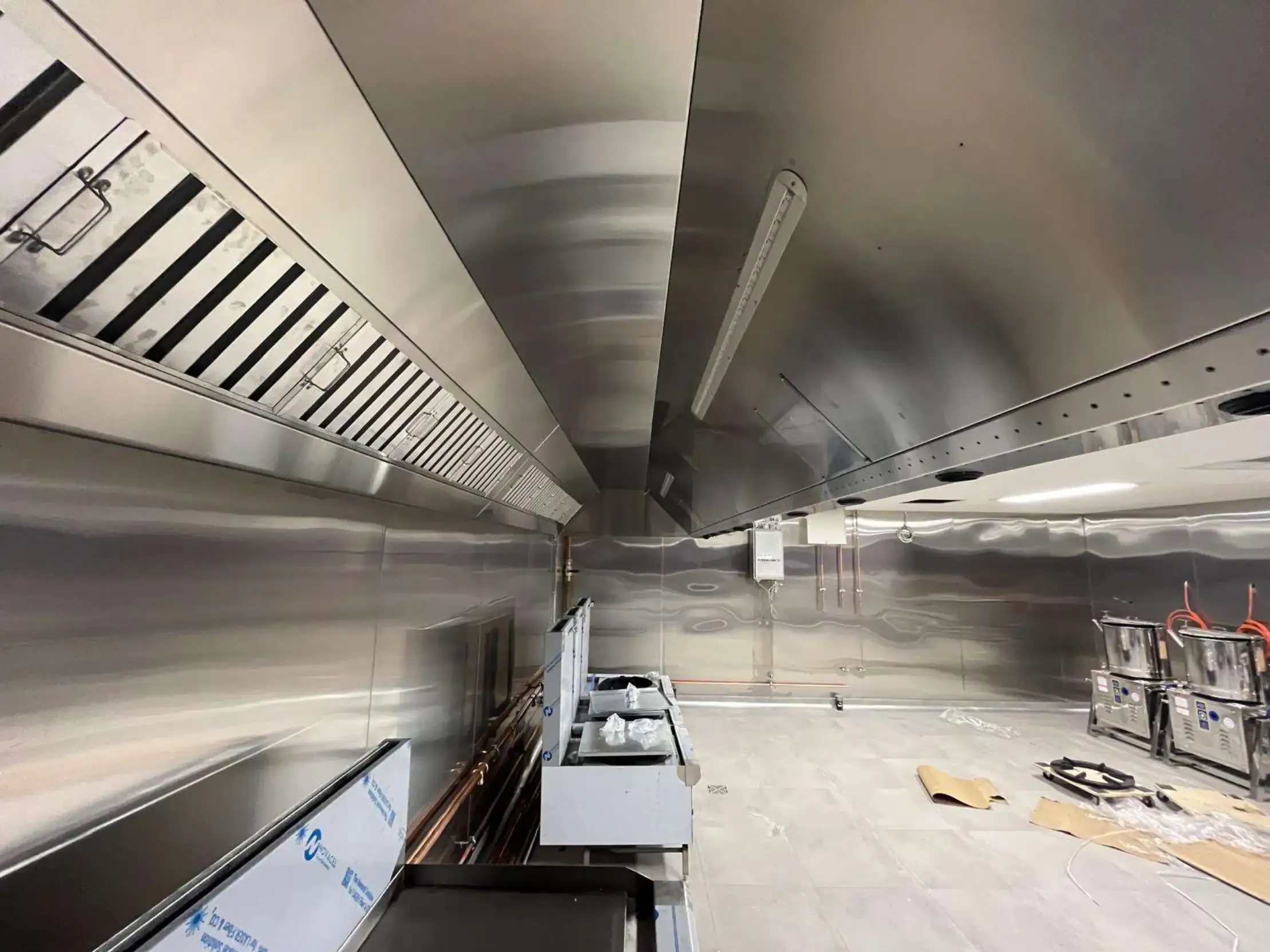
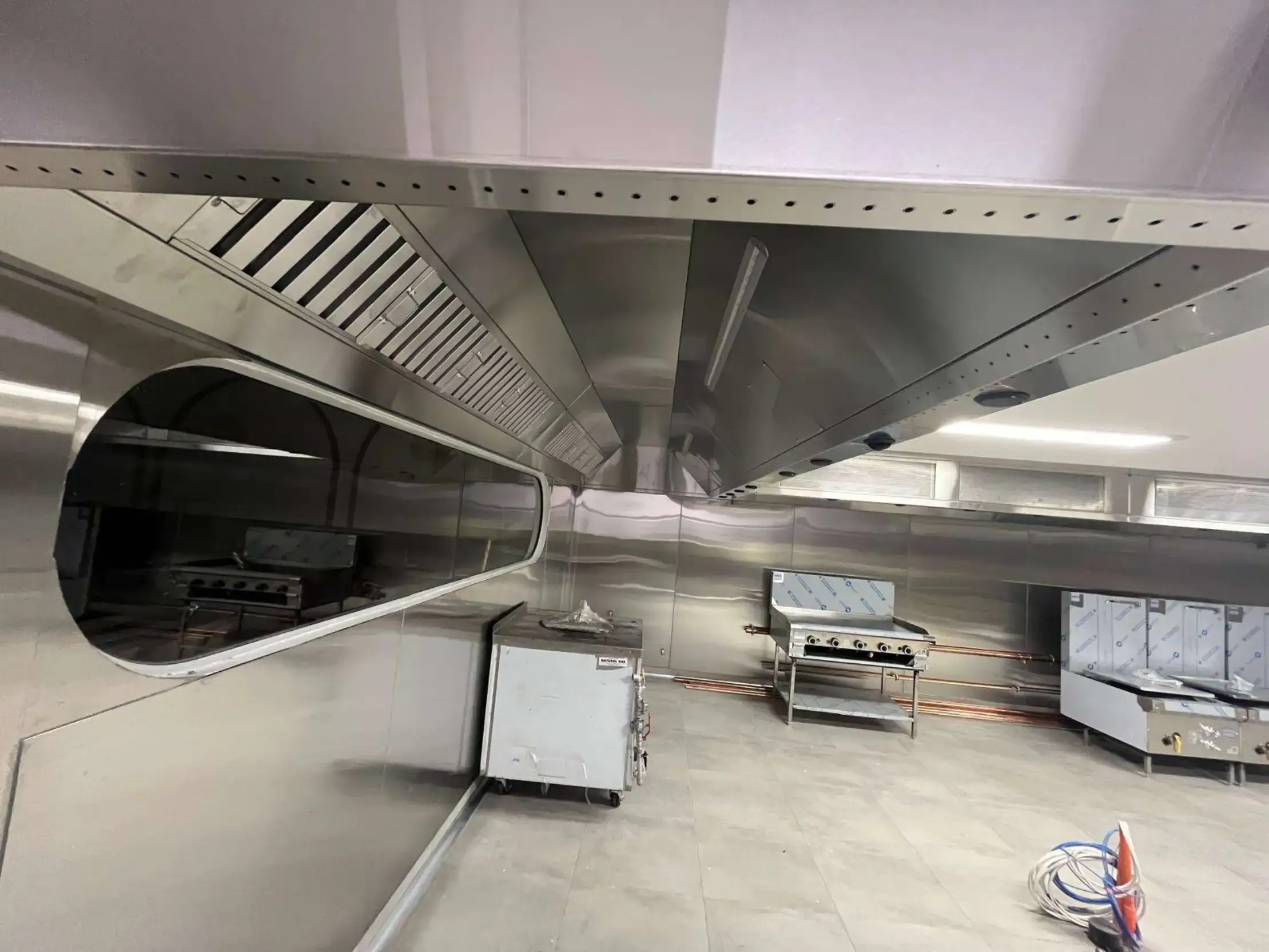
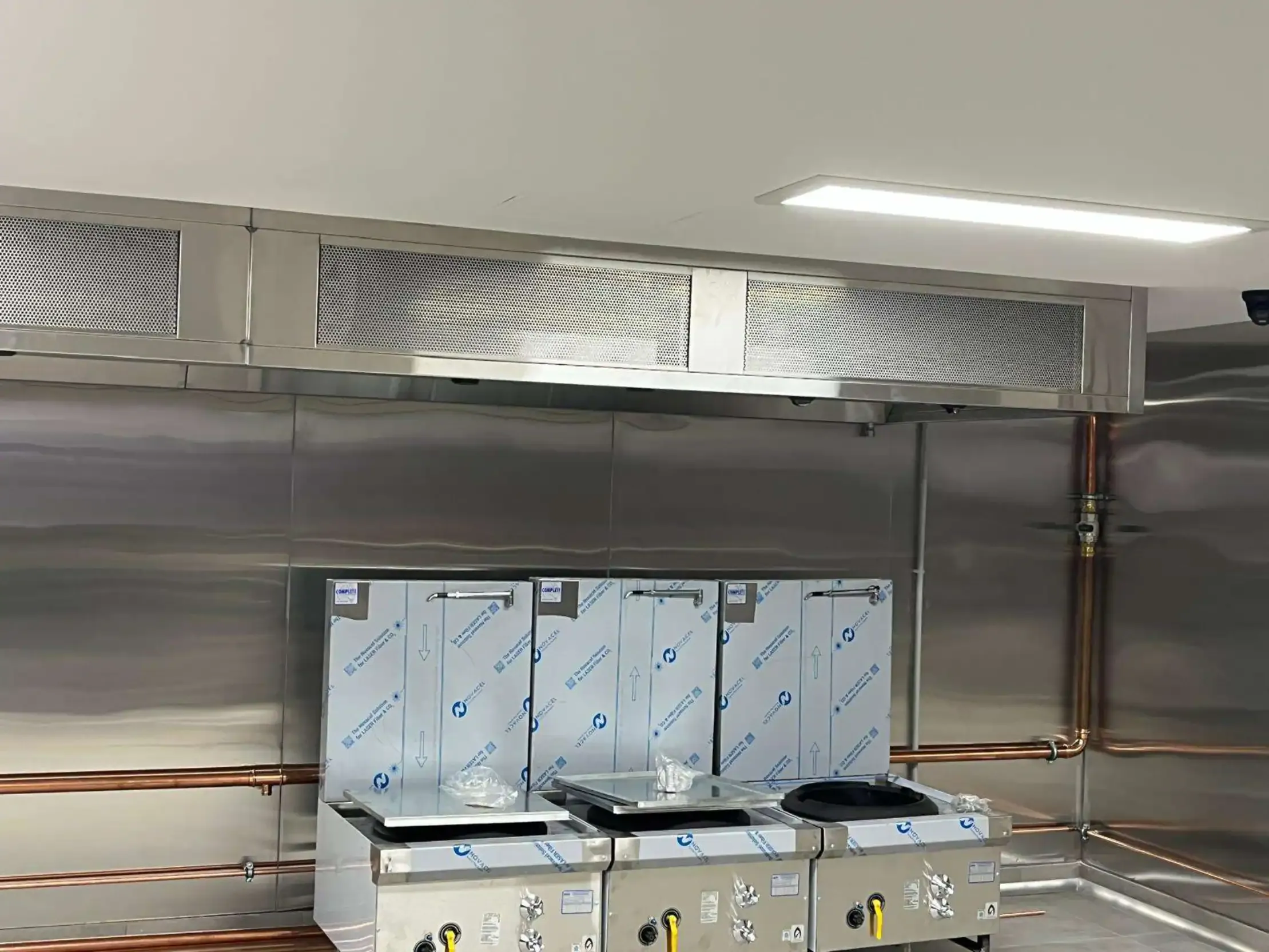
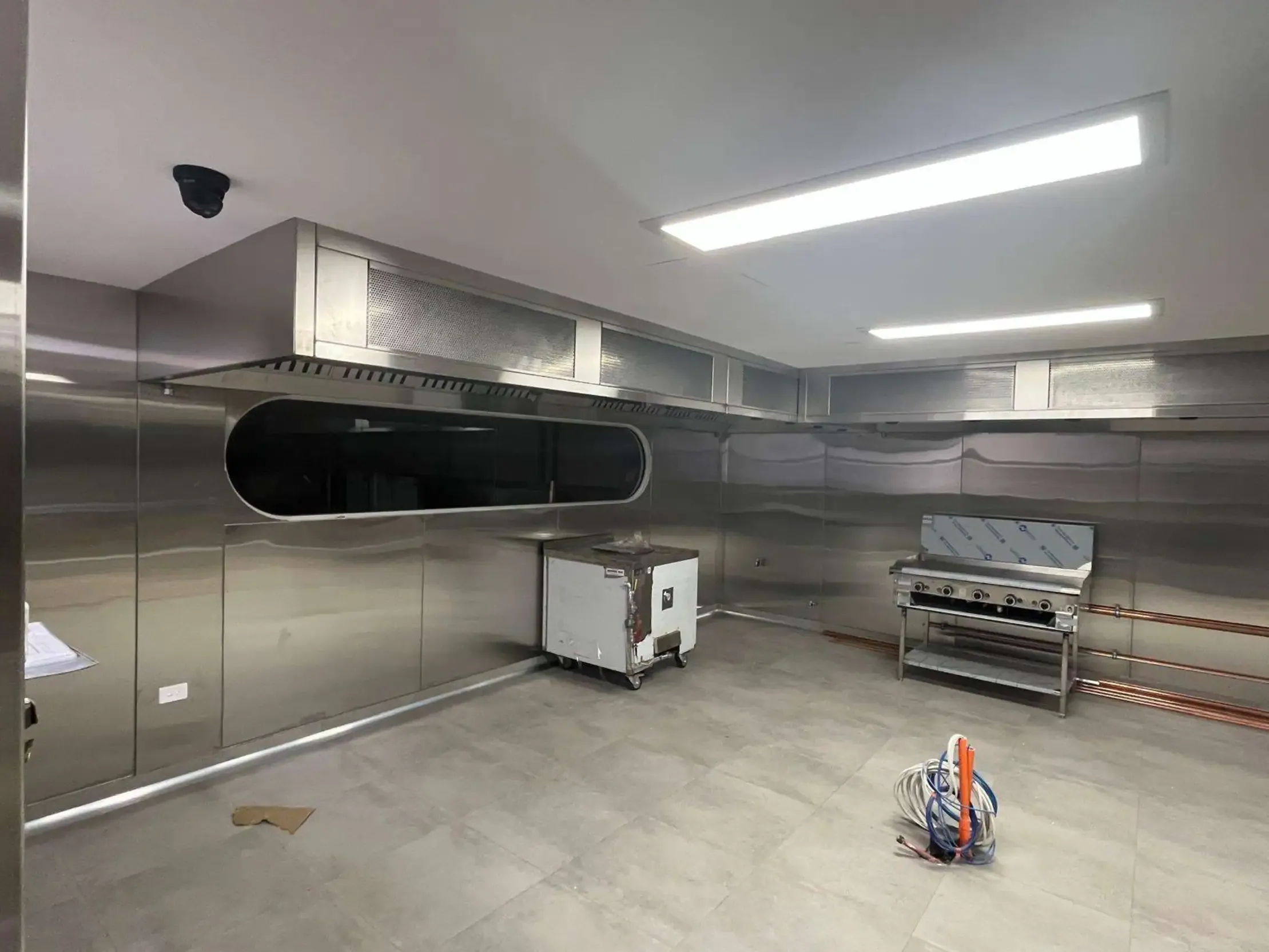
SMS Stainless was engaged to solve a persistent smoke and heat problem in a high-volume commercial kitchen, where standard extraction couldn't keep pace with the equipment load. We engineered a custom rangehood built around jet-assisted airflow technology, pulling smoke, steam and heat out faster while drawing less make-up air than a conventional system.
Understanding Jet Technology in Ventilation
Jet technology, commonly used in industrial and aerospace applications, involves the acceleration of air through nozzles or jets to create high-velocity airflow. When applied to kitchen hoods, this technology can significantly improve the capture and removal of airborne grease, smoke, and vapours by directing powerful air streams towards the cooking area and into the hood’s extraction path
Key Engineering Considerations:- Airflow Dynamics: The design must optimise the direction and speed of air jets to maximise the capture of contaminants without causing turbulence that could spread them throughout the kitchen.
- Noise Levels: Jet systems can be noisy. Careful selection of fan types, sound insulation, and variable speed controls is essential to maintain a quiet kitchen environment.
- Energy Efficiency: The system should use energy-efficient fans and motors, with smart controls that adjust jet speed based on cooking activity.
- Filtration: Incorporate high-efficiency grease and carbon filters to trap particulates and odours before air is expelled or recirculated.
- Maintenance: Design for easy access to filters and jet nozzles for regular cleaning and maintenance, ensuring long-term performance.
- Jet Nozzle Array: Install a series of strategically placed nozzles along the hood’s perimeter, angled to direct air towards the cooktop and into the extraction zone.
- Variable Jet Control: Allow users to adjust the intensity and pattern of the jets based on cooking needs, such as high-power mode for frying or low-power for simmering.
- Slimline Profile: Maintain a sleek, modern appearance with a low-profile canopy that integrates seamlessly into contemporary kitchen designs.
- Smart Sensors: Utilise sensors to detect heat, smoke, and humidity, automatically adjusting jet operation for optimal performance.
- LED Lighting: Integrate energy-efficient LED lighting to provide clear visibility of the cooking area.
- Superior capture of smoke and grease, reducing cleaning needs.
- Improved air quality and odour removal.
- Customisable operation for different cooking styles.
- Potential for energy savings with smart controls and efficient airflow
Gallery